1. Definition of Partial Discharge (PD)
Partial Discharge (PD) refers to a localized electrical discharge that only partially bridges the insulation between conductors. Unlike a complete breakdown, PD occurs in regions of high electrical stress where the insulation is weakened or contains defects. It manifests as brief, discontinuous electrical sparks or pulses within gaseous, liquid, or solid dielectric materials. PD does not result in immediate failure but progressively degrades insulation integrity, making it a critical early warning indicator in high-voltage equipment.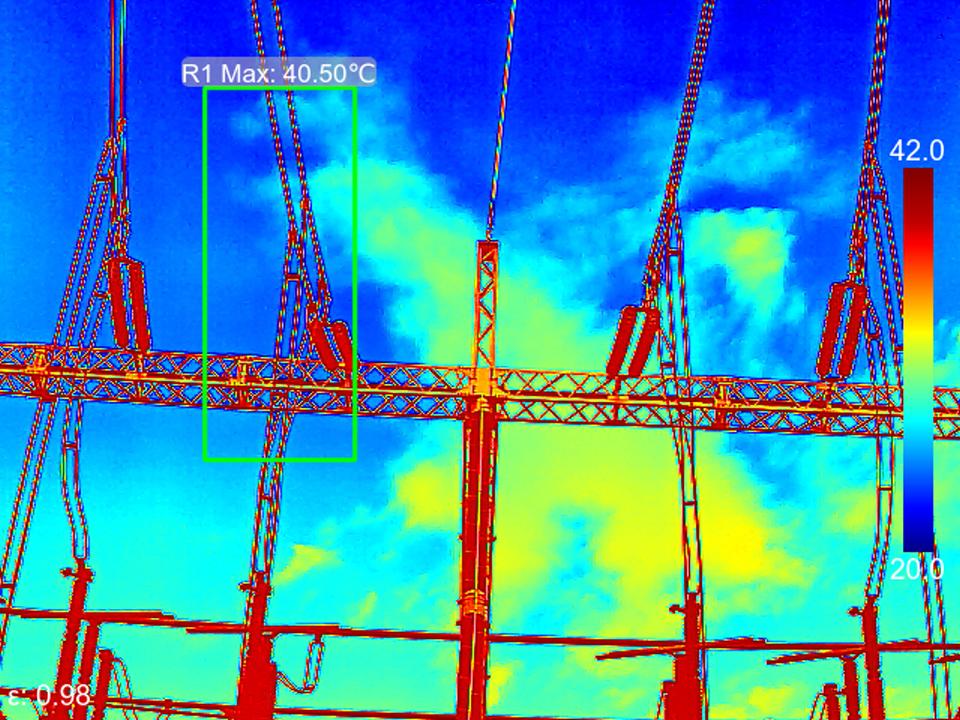
2. Major Types and Hazards of PD
Types:
- Corona Discharge: Occurs in gaseous dielectrics (e.g., air) around sharp conductors.
- Surface Discharge: Arises along the interface of solid and gaseous dielectrics.
- Internal Discharge: Happens within voids or cavities in solid or liquid insulation.
- Floating Discharge: Caused by isolated conductors (e.g., loose components) within insulation.
Hazards:
- Insulation Degradation: PD generates heat, UV radiation, and chemically reactive byproducts (ozone, nitrates), eroding insulation over time.
- Progressive Damage: Repetitive discharges create "electrical treeing," forming conductive carbonized channels that reduce dielectric strength.
- Catastrophic Failure: Unchecked PD can culminate in short circuits, fires, or explosions, leading to costly downtime and safety risks.
PD is primarily triggered by:
- Material Defects: Voids, impurities, or delamination in insulation.
- Aging & Degradation: Thermal cycling, moisture ingress, or-cracks.
- Contamination: Dust, moisture, or conductive particles on insulation surfaces.
- High Electrical Stress: Voltage surges, unbalanced phases, or design flaws concentrating electric fields.
4. PD-Associated Phenomena and Detection Methods
PD events generate multifaceted physical signatures:
- Electromagnetic Emissions: Radiofrequency (RF) waves (detectable via UHF sensors).

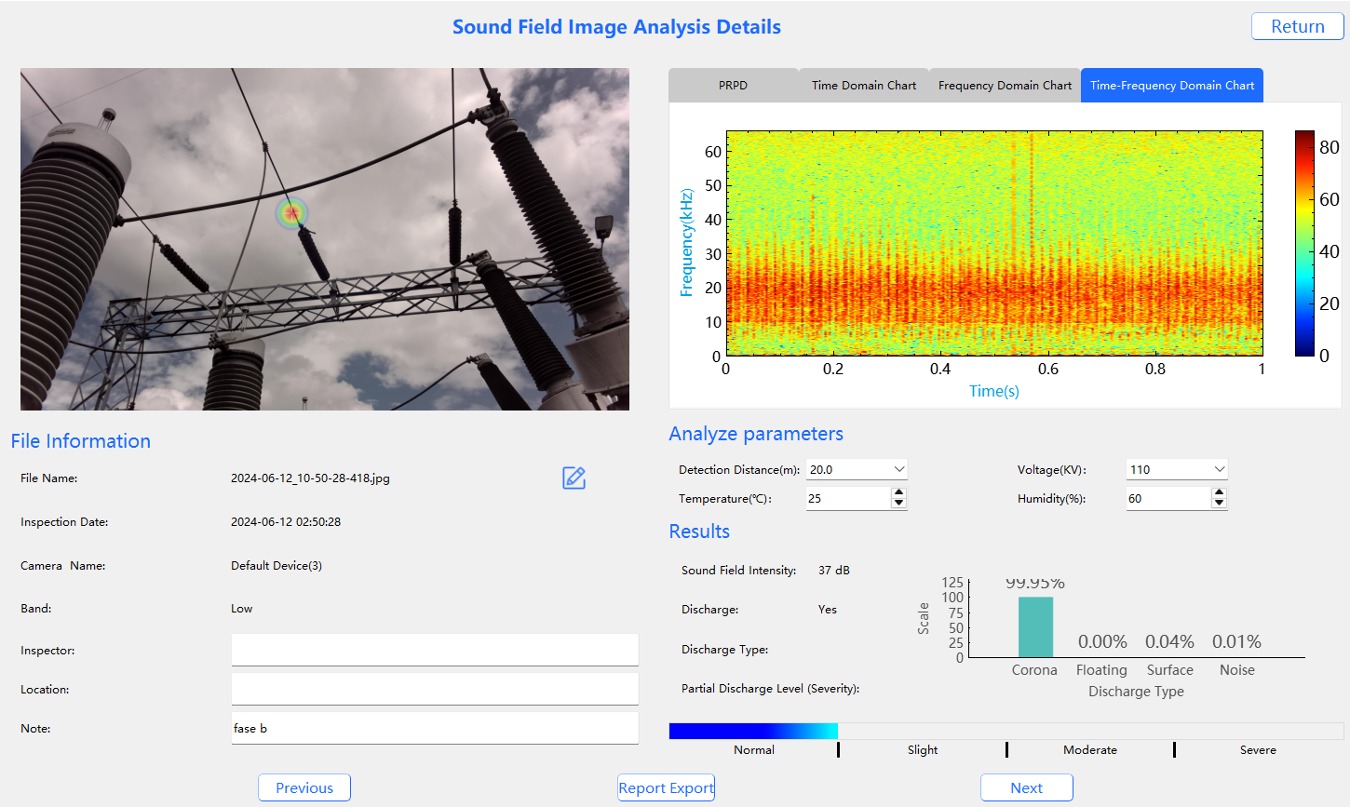
- Acoustic Waves: Ultrasonic pulses emitted by discharge impacts (captured by acoustic sensors).
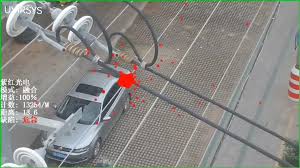
- Light Emission: Visible/UV photons in gaseous PD (detected by photomultipliers).
- Chemical Byproducts:itored via gas chromatography).
- Current/Voltage Pulses: Transient pulses superimposed on waveforms (measured with high-frequency CTs or HV capacitors).
These phenomena underpin non-intrusive PD monitoring techniques, enabling real-time assessment without equipment shutdown.
Phase-Resolved Partial Discharge (PRPD) analysis plots discharge magnitude against the AC voltage phase angle. Different PD types exhibit distinct "fingerprints":
- Corona Discharge: Concentrated near voltage peaks.
- Internal Void Discharge: Clustered in regions of rising/falling voltage.
- Surface Discharge: Spread across multiple phase angles.
- Floating Discharge: Irregular patterns with high magnitude.
By correlating phase-dependent patterns with known PD behaviors, PRPD allows engineers to:
- Identify discharge sources (e.g., voids vs. surface contamination).
- Assess severity based on discharge repetition rate and magnitude.
- Tailor maintenance strategies (e.g., resin injection for voids vs. cleaning for surface discharge).

6. Advanced Detection: The Role of Acoustic Cameras
Modern acoustic cameras revolutionize PD detection by combining ultrasonic sensing with visual imaging:
- Long-Range Capability: Detect PD sources from safe distances (>100 meters), ideal for substation scanning.
- PRPD Generation: Convert ultrasonic emissions into PRPD patterns for real-time PD classification.
- Multimodal Integration: Hybrid models (e.g., infrared-ultrasound fusion) enable comprehensive asset health assessment:
- Infrared detects thermal anomalies from resistive heating.
- holistic diagnostics for transformers, switchgear, and cables.
For integrated PD monitoring solutions, explore the HA3T Acoustic Camera, designed for precision diagnostics in high-voltage environments.


